Step inside Kama.
KAMA
The cyclista fashion brand KAMA needed a new exhibition booth design, that is versatile and can be used both for large trade fairs and smaller pop-up stores. Sustainability, easy assembly and disassembly, and transportability were also important criteria.
Role
Designer
Date
2025
Team
Lars Kähler, Taranom Sedghi, Derya Gurbuz
mission
briefing
KAMA needed a new exhibition booth design that is versatile and can be used both for large trade fairs and smaller pop-up stores. Sustainability, easy assembly and disassembly, and transportability are important criteria. All furniture and materials used must be fireproof for indoor events or comply with fire safety regulations. The target group was defined as cyclistas who are either amibitious hobbyists or professional athletes. The max space to be used was 50 squaremetres.
user research & core values
brand analysis
target group
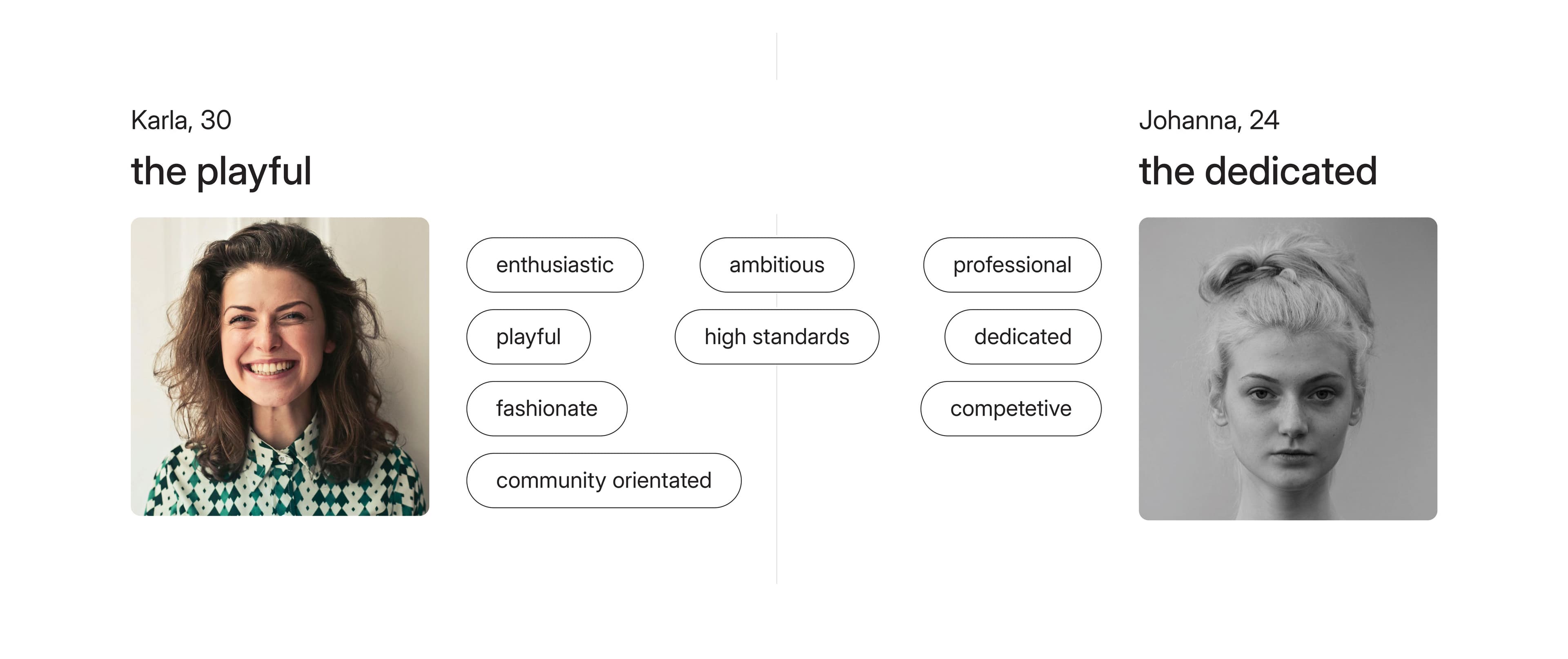
From this analysis we distilled two personas representing KAMA's core audience. They embody two sides of the same target group: one rides for joy and connection, the other for performance and ambition. Both expect a brand that matches their attitude — which is why they served as the compass for every design decision in the booth concept.
brand prism
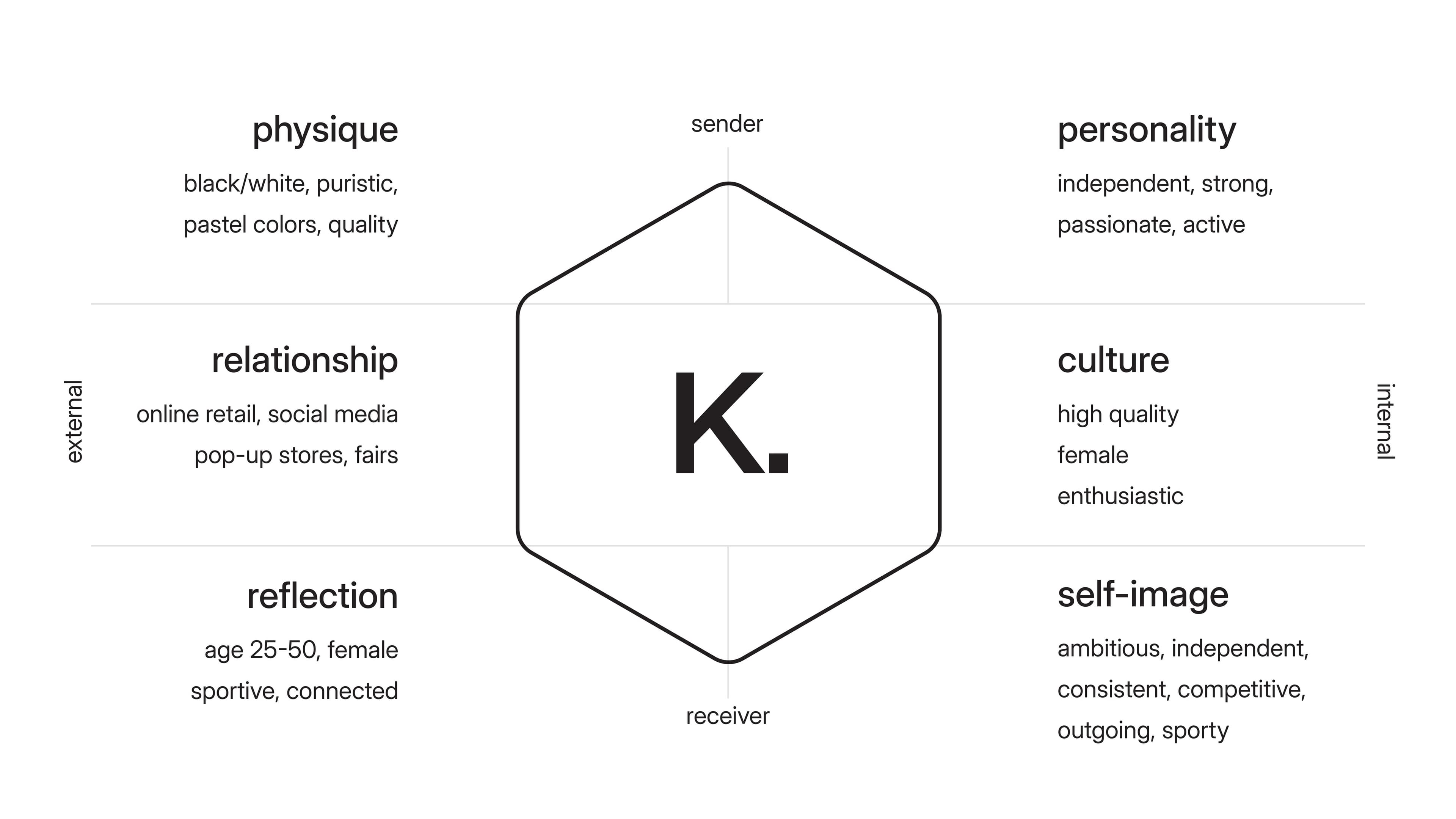
To capture the essence of the KAMA brand, we analysed it using Kapferer's brand prism. It maps how the brand presents itself externally — its look and the relationship with its customers — against what drives it internally: its personality, culture and self-image. The result is a coherent picture of a brand that knows exactly who it is — and who it is for.
concept
step inside kama
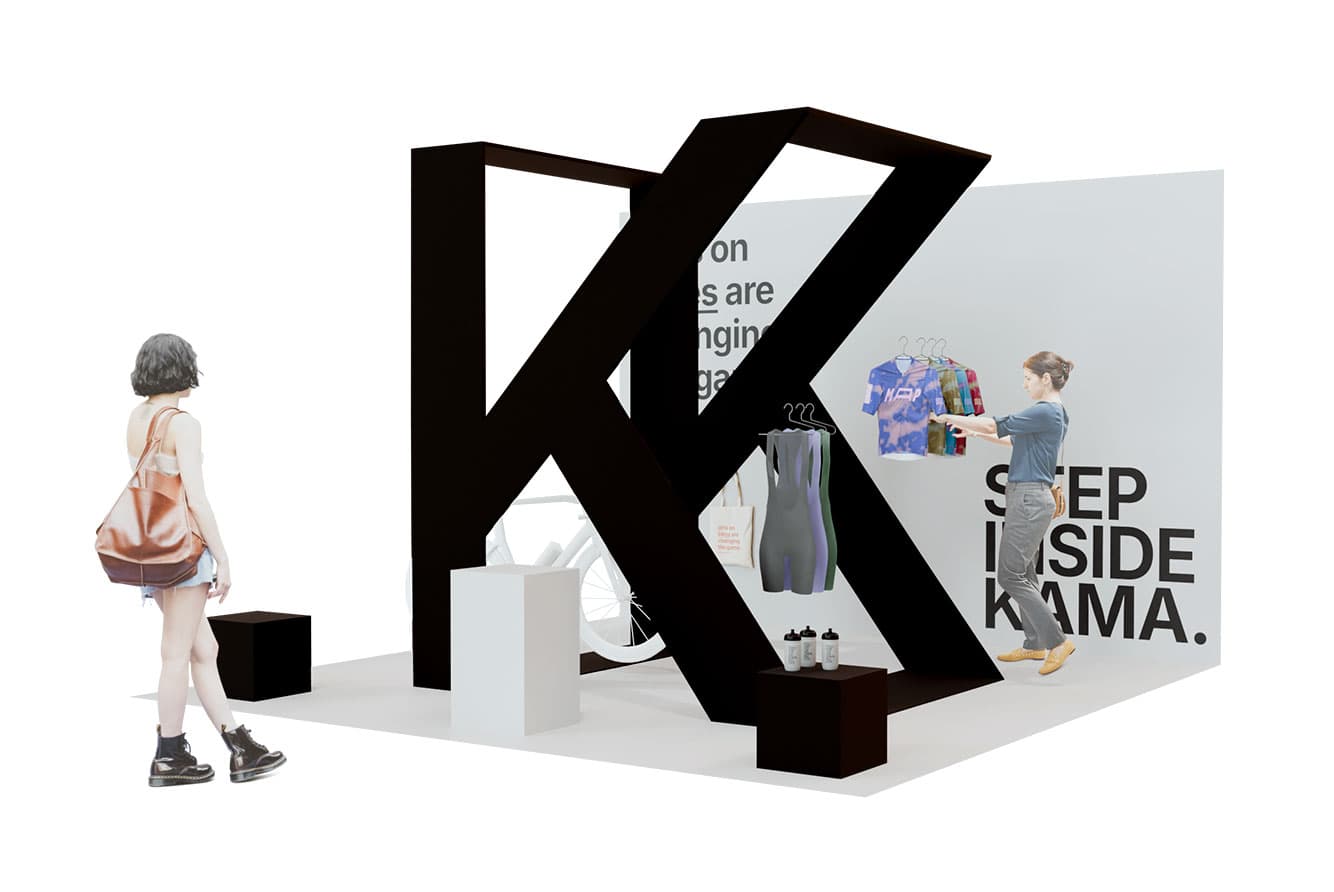
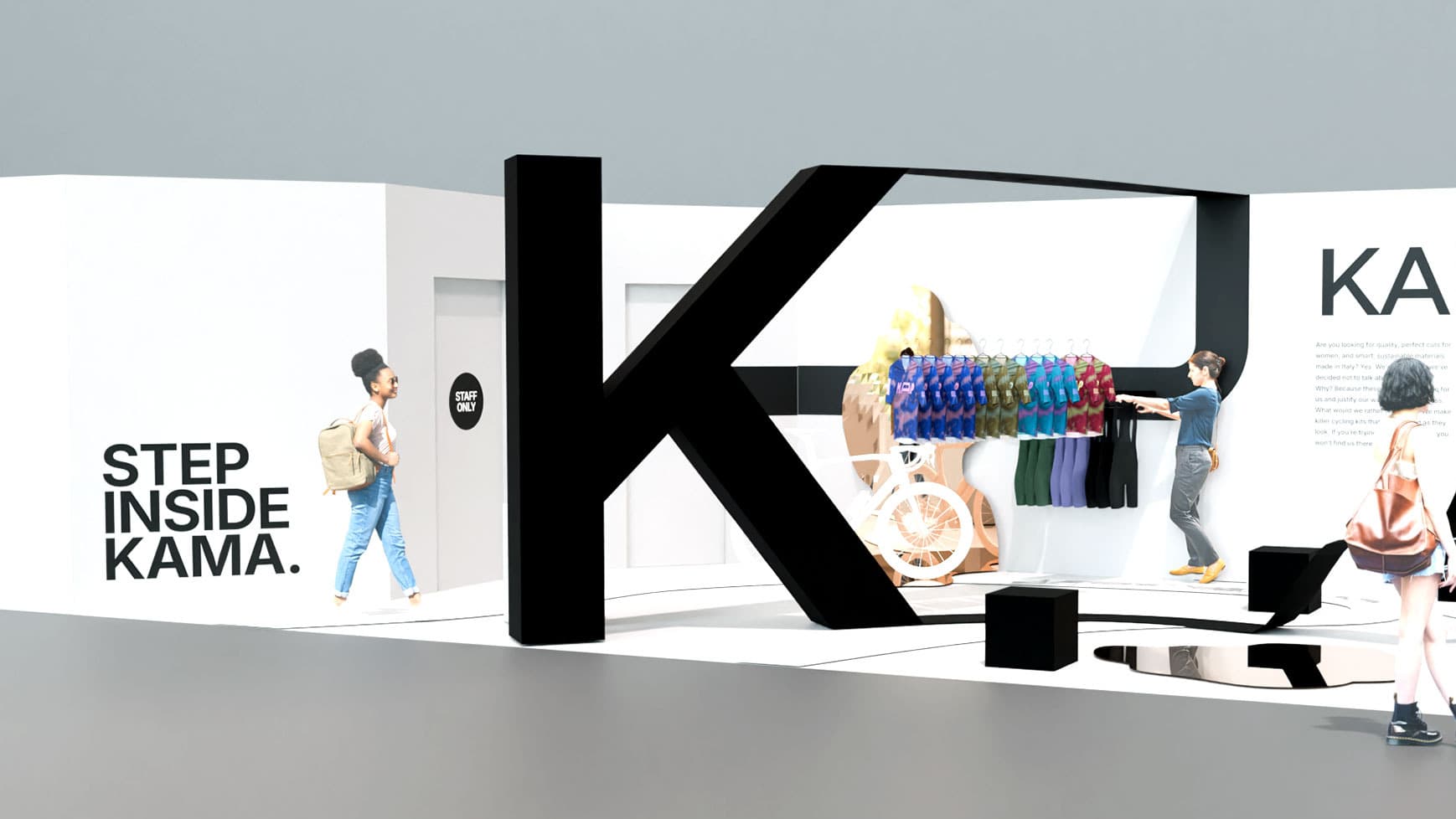
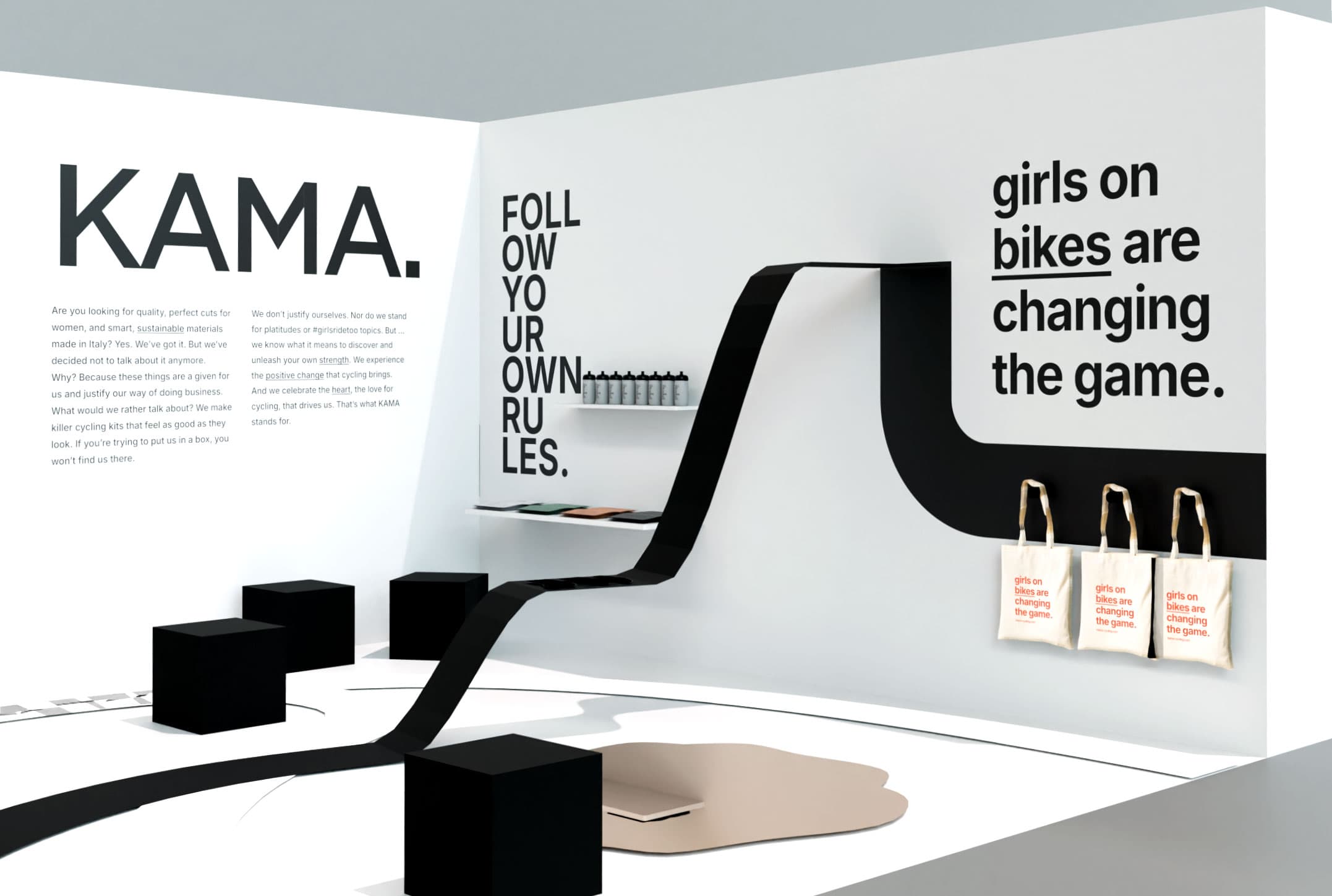
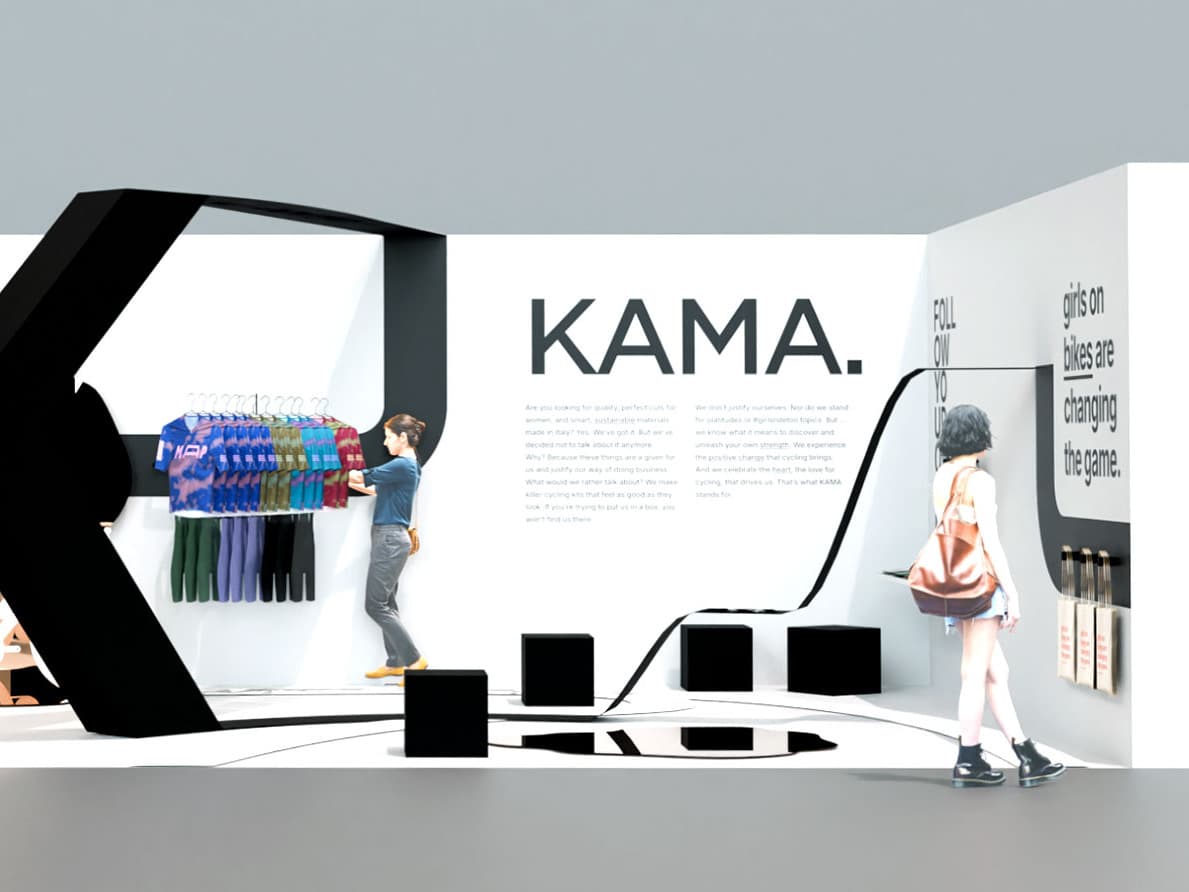
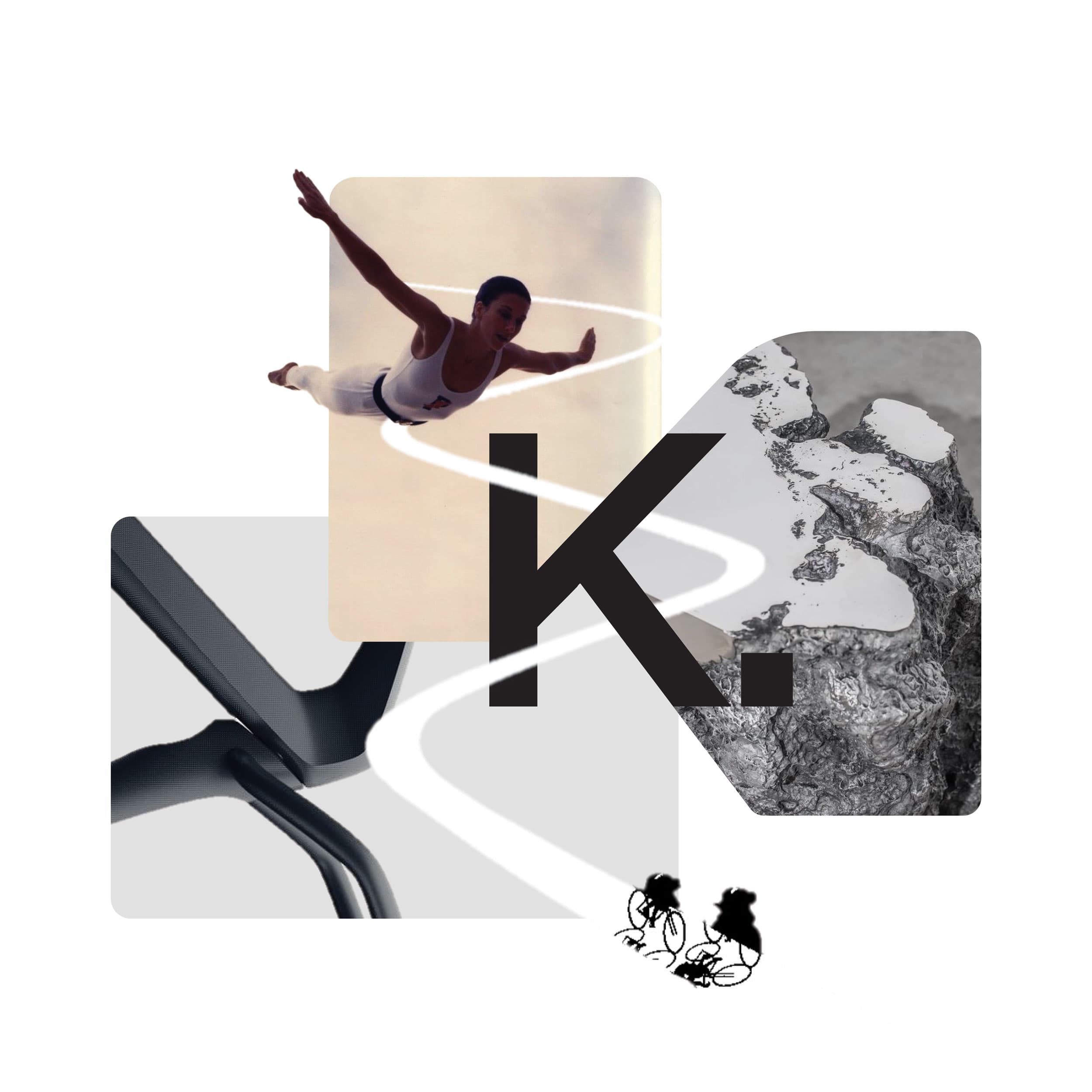
The concept transforms the KAMA brand into a distinctive spatial eyecatcher representing its strength and dedication. The moodboard serves as both a conceptual and physical representation of the booth, built around the key words fluidity, movement and flexibility — reflected in the floating shapes and materials throughout the space.
spatial design
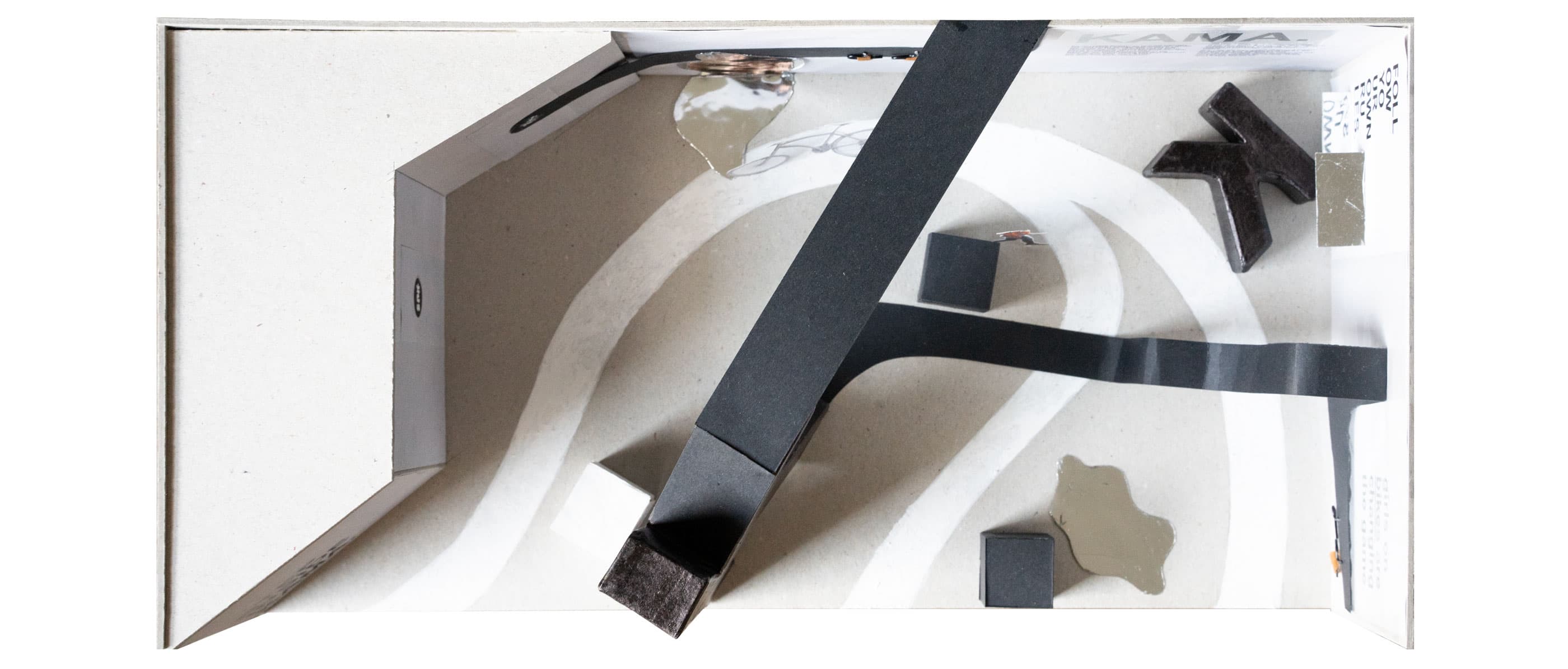
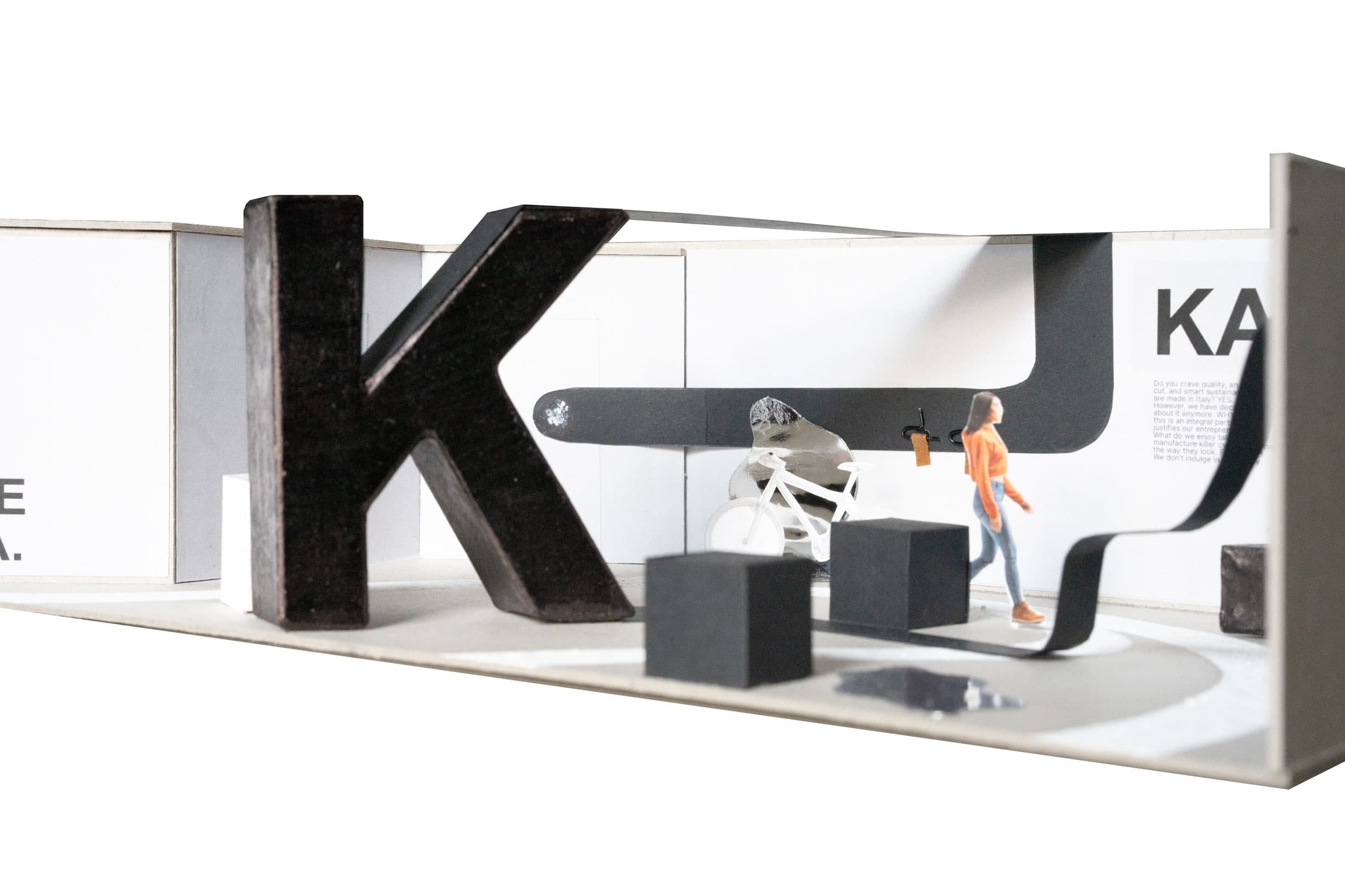
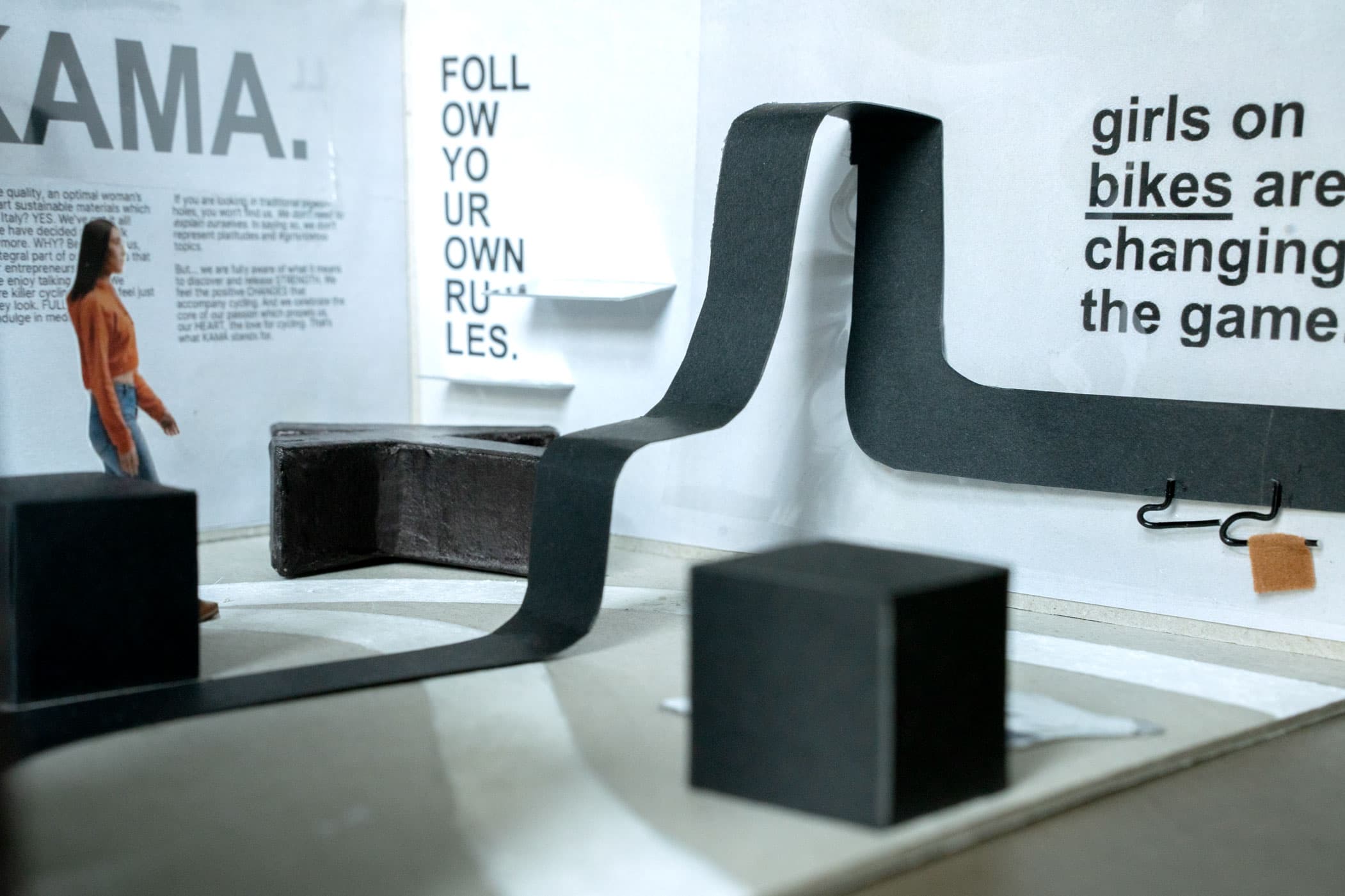
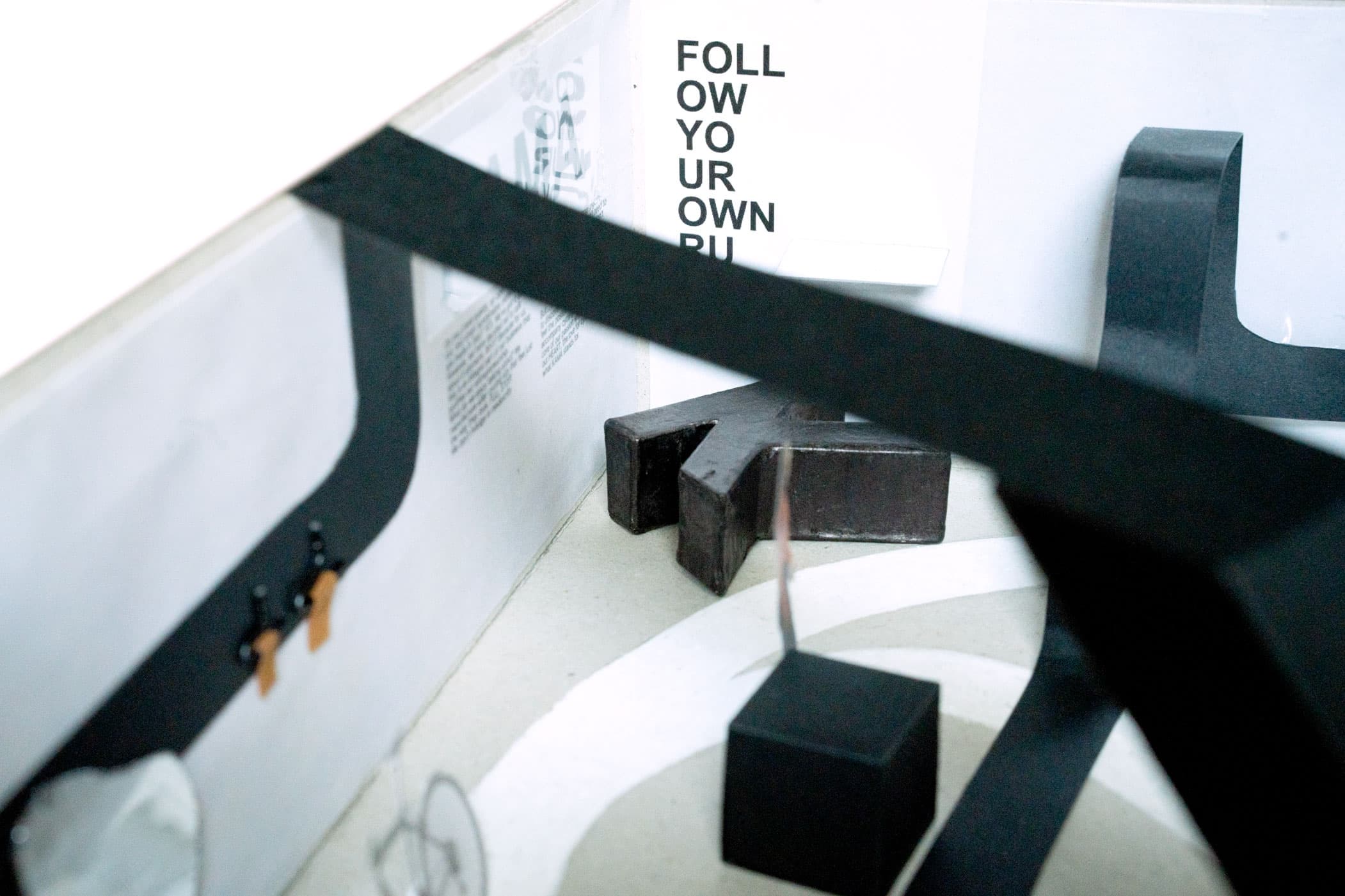
To refine the booth design, we translated it from paper into a physical scale model. Working in three dimensions made the concept tangible early on: proportions could be tested, sightlines checked and the interplay between the K, the walls and the flowing floor lines experienced firsthand. This hands-on approach eased the whole design process. Insights from the model fed directly back into the drawings, allowing us to fine-tune materials, placement and structure long before construction began.
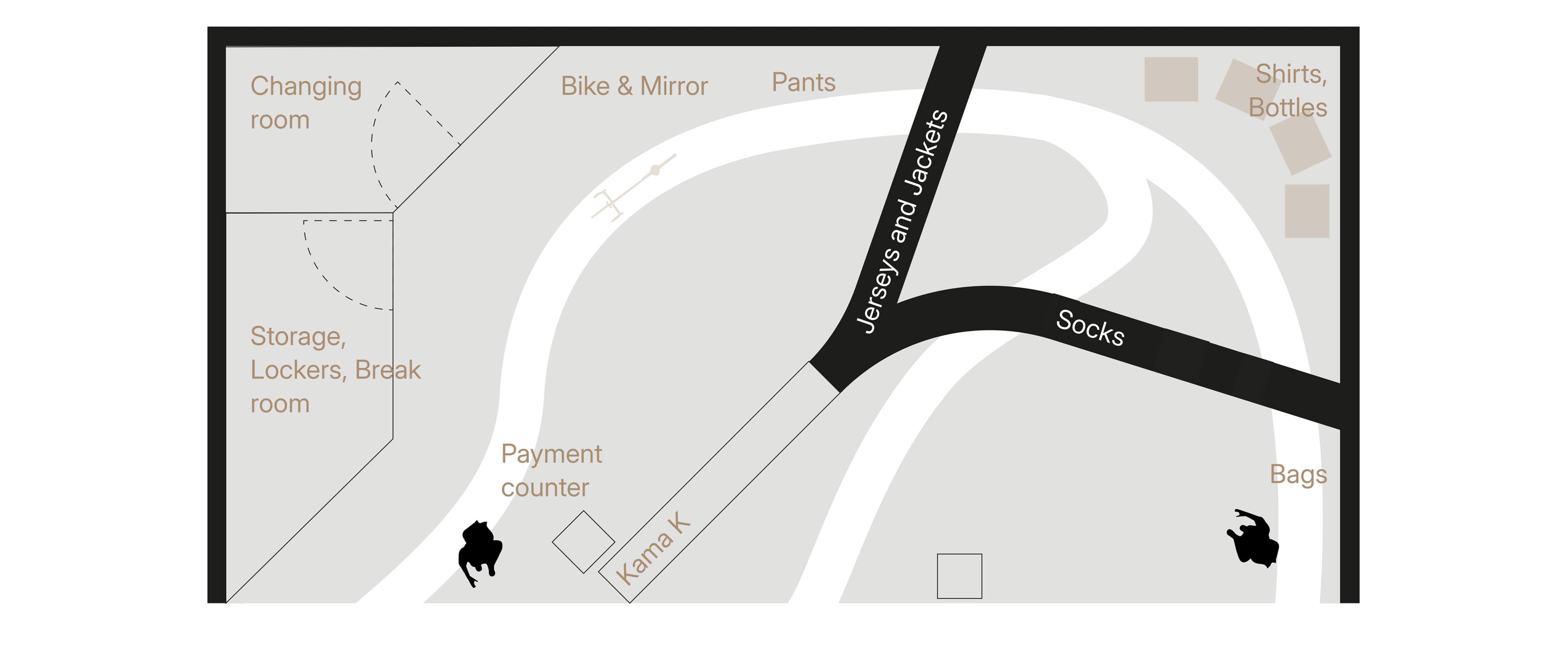
floor plan
3D modeling
Following the physical model, we brought the booth into the digital space. Building the design in 3D allowed us to push the concept further:Every element could be refined with precision, materials tested in realistic lighting and perspectives explored that a flat drawing could never show. The resulting renders present the booth in its final form: a confident spatial translation of the KAMA brand, ready to be experienced before a single element is built.