Design for trust
ComCar
The first autonomous vehicles have already been introduced and it will not take long before the technology is fully developed. The question, however, is whether humans are willing to hand over their control to a machine. ComCar creates trust.
Role
Designer
Date
2019
Team
Tea Rustani, Nicolas Hoffmann, Franziska Baumgartner
Problem & Idea
Lack of trust
Trust remains one of the most significant barriers to widespread adoption of autonomous vehicles. Despite technological advancements, many passengers struggle with the psychological discomfort of relinquishing control to an automated system. This disconnect arises from a fundamental transparency problem: users cannot see or understand what the vehicle perceives, processes, or intends to do. Without visibility into the decision-making process, anxiety builds, hesitation persists, and acceptance lags.
comcar was conceived as a holistic answer to this challenge. Rather than treating trust as something to be earned solely through safety statistics or external marketing, comcar brings transparency directly into the passenger experience through real-time visual interfaces. The core insight is simple yet profound: if passengers can perceive what the car sees and anticipate where it will go, confidence naturally follows. By embedding communication systems directly into the cabin environment, comcar transforms the autonomous ride from a black-box journey into a collaborative, understandable experience.
Research & Design
Design for Trust
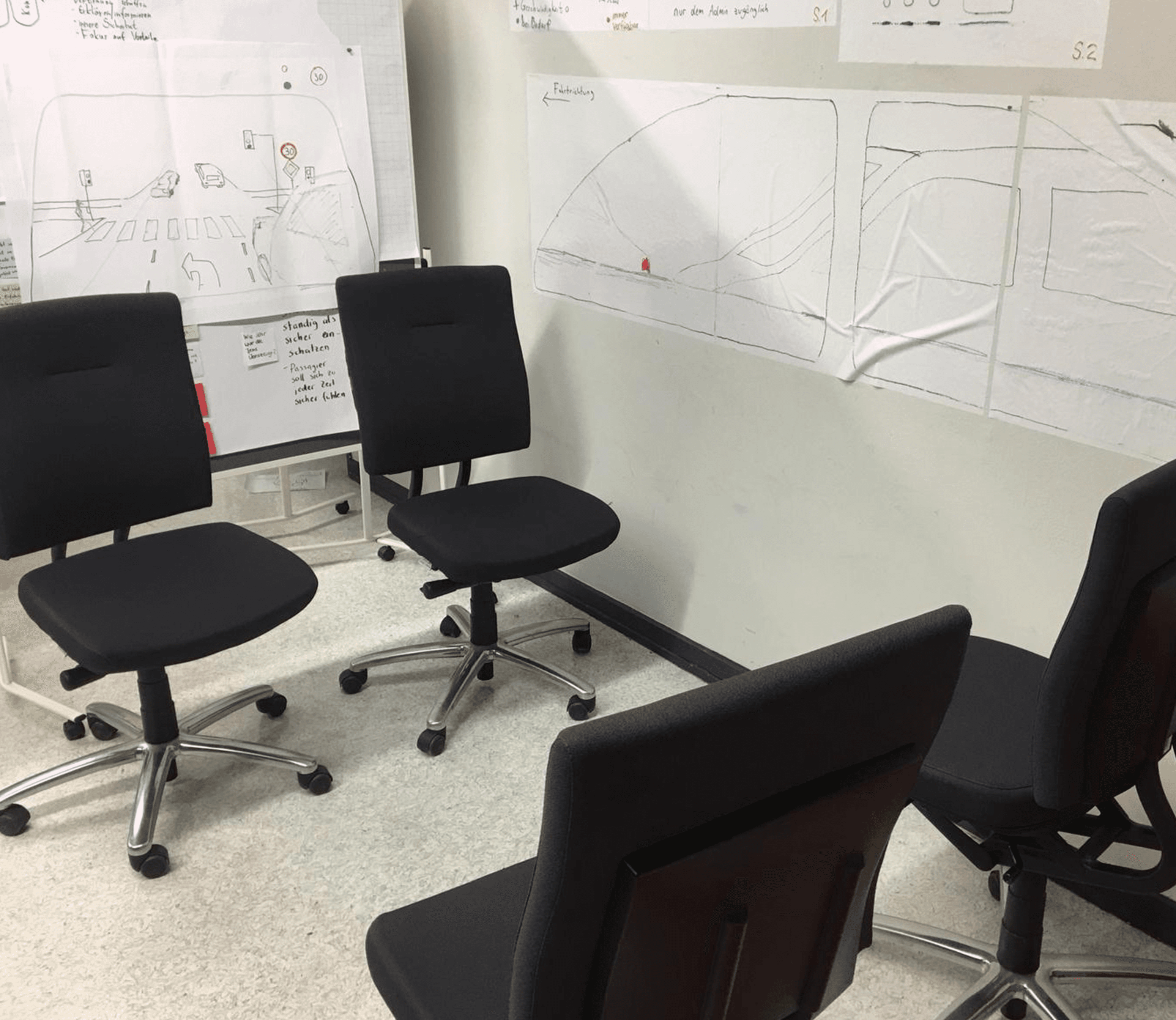
Understanding passenger anxiety in autonomous vehicles required more than theoretical analysis—it demanded embodied experience and direct industry insight. Our research phase was designed to uncover the fundamental relationship between sensory information and perceived safety, combining hands-on experimentation with expert perspectives from the mobility sector.
Body Storming
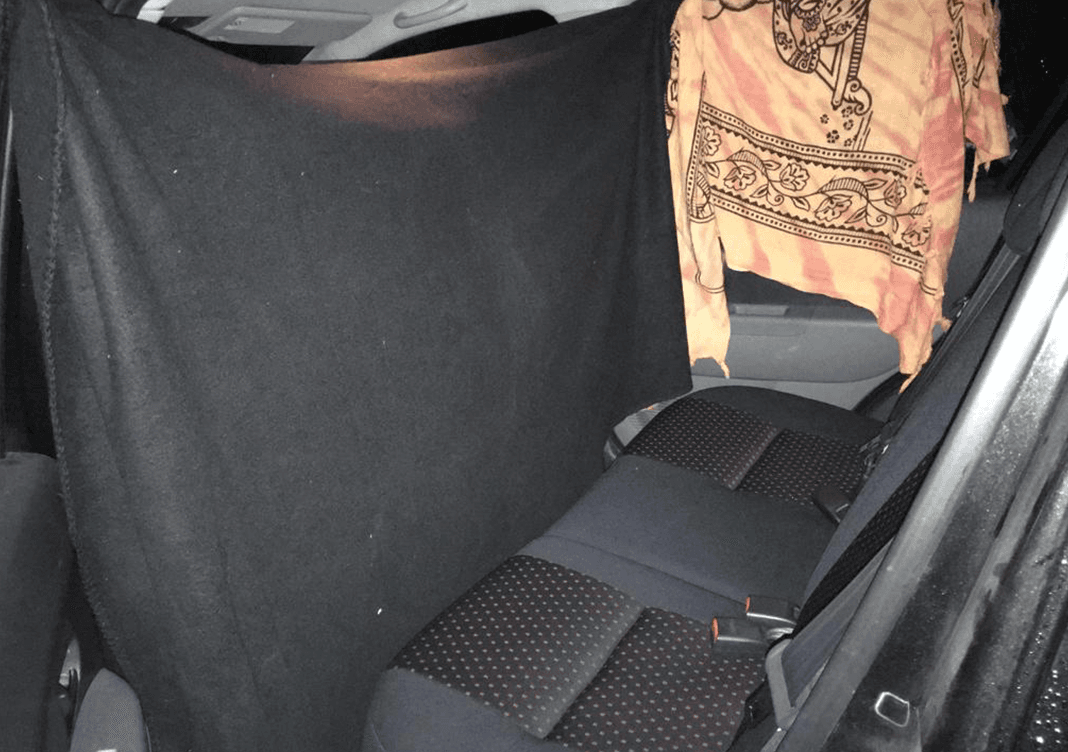
We initiated our investigation through a controlled body storming exercise that pushed us into the passenger perspective. Participants were driven in a conventional vehicle while progressively stripped of environmental information: first, windows were partially covered to limit forward vision; then earplugs were used to eliminate auditory cues from the road; finally, eyes were completely covered to simulate total information blackout. This graduated deprivation allowed us to trace how each layer of sensory input contributes to our sense of security. What emerged was a clear hierarchy: motion becomes disorienting without visual confirmation, auditory feedback provides crucial rhythm and predictability, and complete isolation generates profound unease despite objective safety. The exercise revealed that trust is not merely about knowing the car will stop—it's about feeling connected to the journey's progression through multiple channels.
Expert Interview
Complementing our experiential research was a structured interview with the founder of ioki, a mobility and autonomous vehicle company headquartered in Frankfurt. This conversation provided critical context on current industry challenges, particularly around passenger acceptance thresholds and the gap between engineering reliability and public perception. Key insights centered on the finding that accident rates matter less to potential users than their subjective comfort level during routine rides. The discussion underscored the importance of designing communication systems that address emotional needs alongside functional requirements—a principle that became central to comcar's development.
Persona and Scenario Mapping
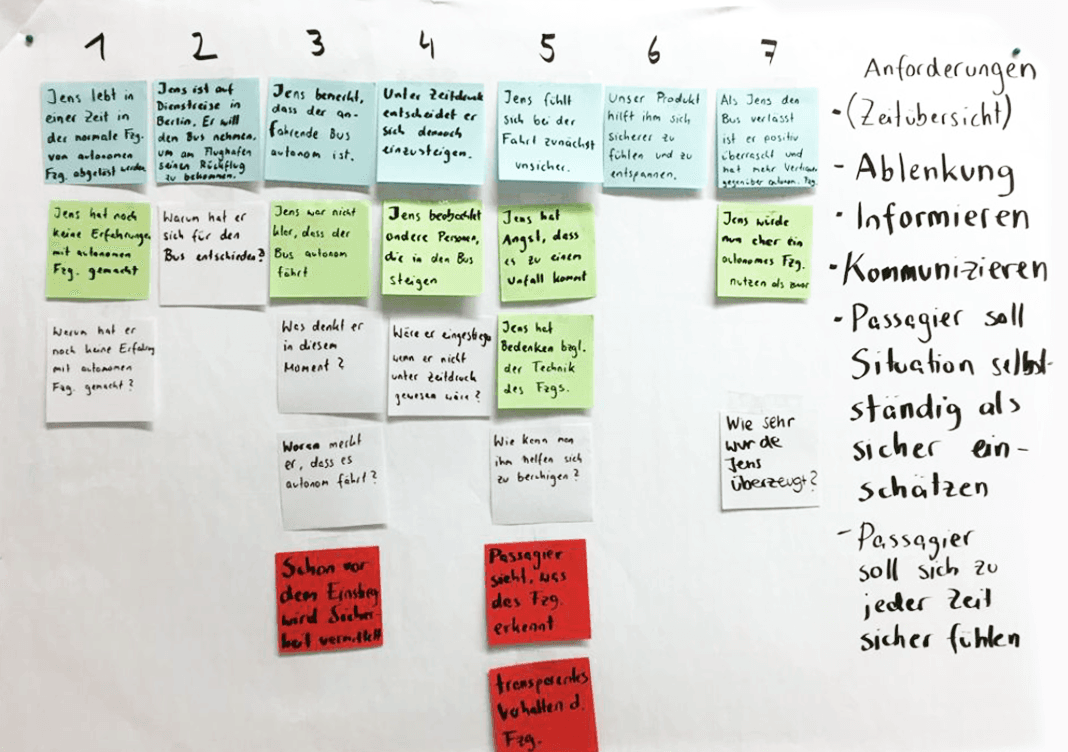
With empirical observations and expert input integrated, we moved to synthesis. We crafted representative personas capturing distinct passenger archetypes—first-time riders, anxious travelers, accessibility-dependent users—and mapped specific moments where information gaps create friction. Scenarios ranged from merging onto highways to navigating pedestrian-heavy intersections, each highlighting unique communication needs. These artifacts became our design compass, ensuring that subsequent solutions addressed real human experiences rather than abstract problems. The research phase thus transformed abstract concerns about "trust" into concrete, actionable design opportunities rooted in both lived sensation and industry reality.
Concept
Building trust
The comcar system comprises two complementary components designed to work in harmony, addressing different aspects of the passenger trust equation.
Perception Awareness
ComLight
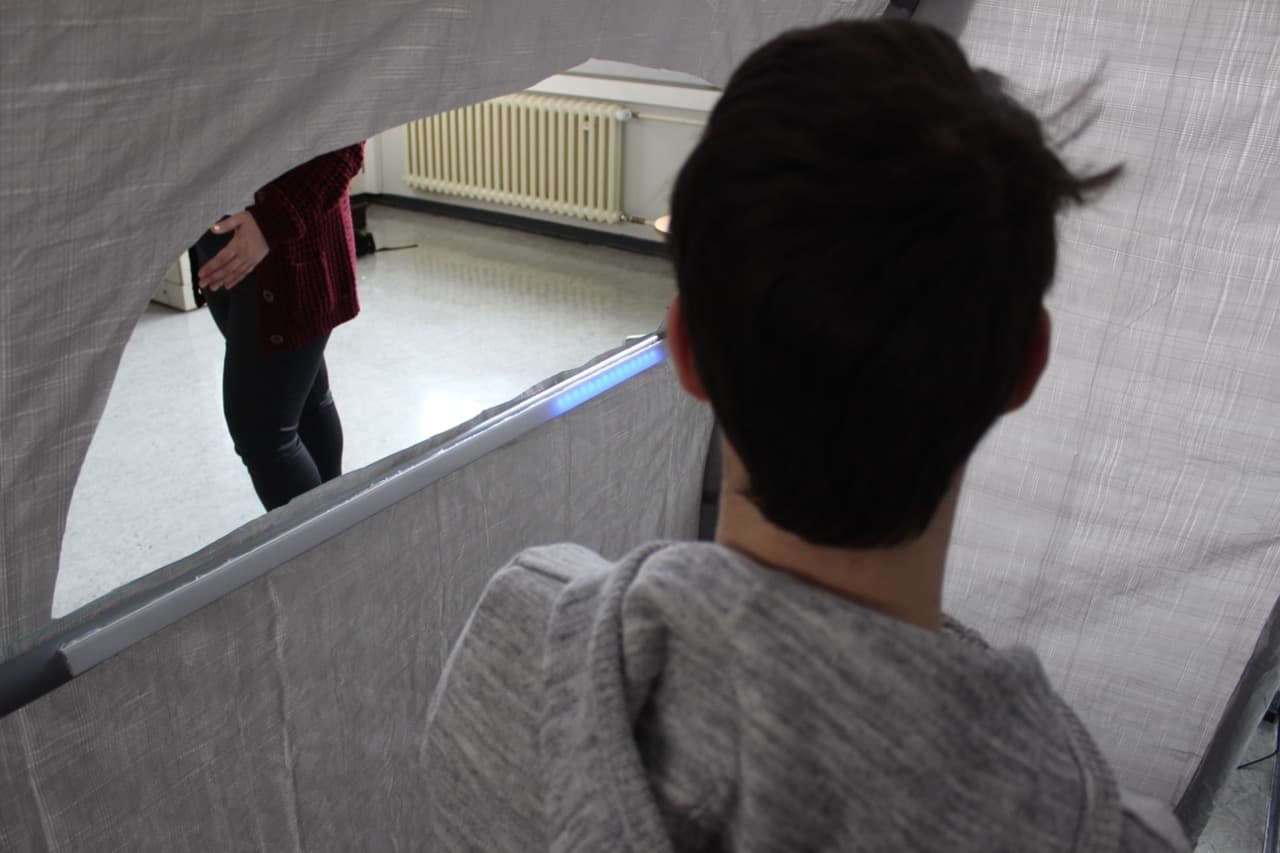
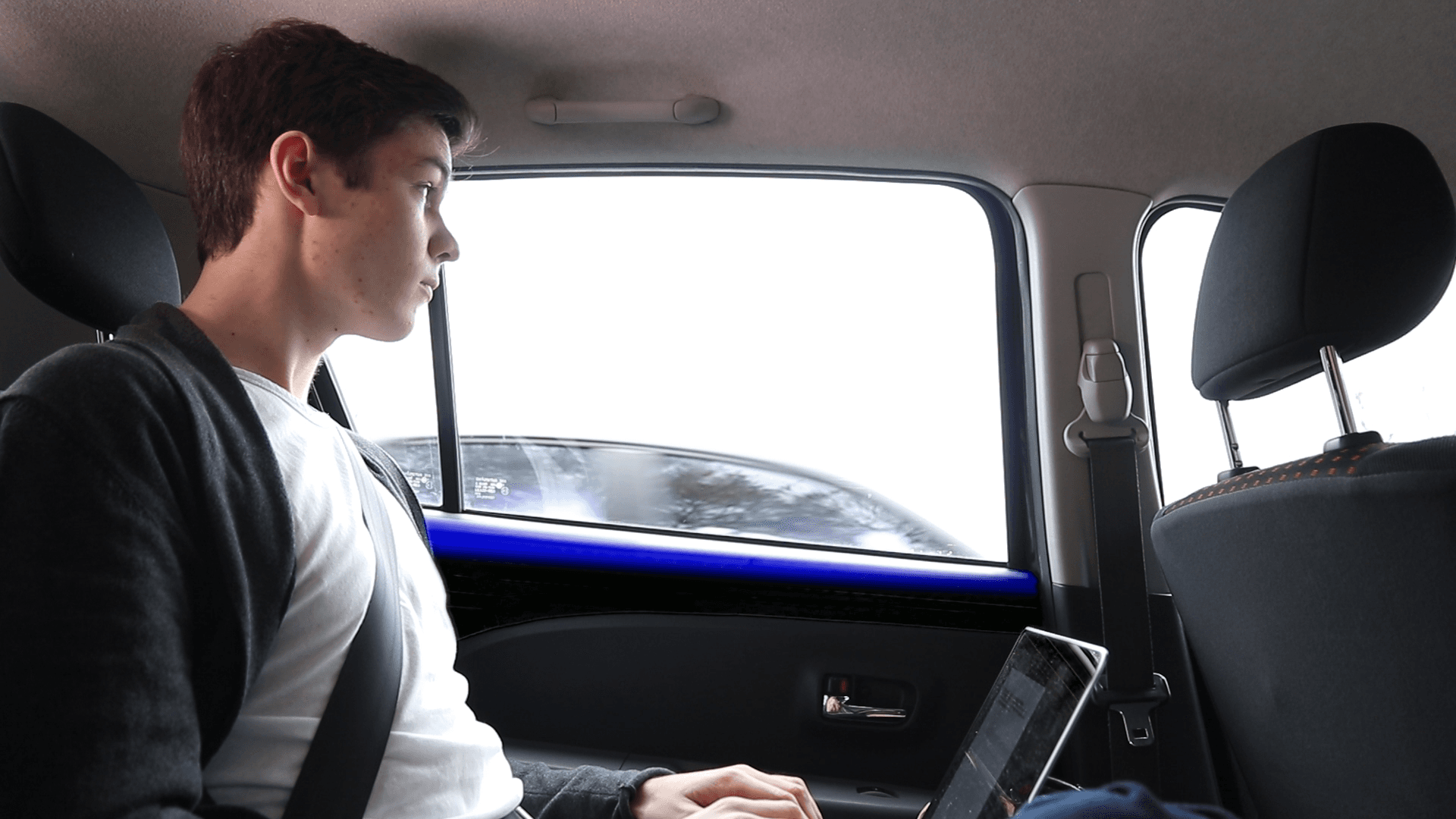
Installed along the interior window line as a responsive LED strip, ComLight provides immediate visual feedback about the vehicle's perception system. When nearby objects—other cars, pedestrians, cyclists, or obstacles—are detected by sensors, corresponding sections of the light strip illuminate to indicate their location relative to the passenger. This creates an intuitive layer of situational awareness, allowing riders to confirm that the system is actively monitoring its surroundings. The lighting acts as a bridge between machine vision and human understanding, demystifying the detection process that would otherwise remain invisible.
Motion Anticipation
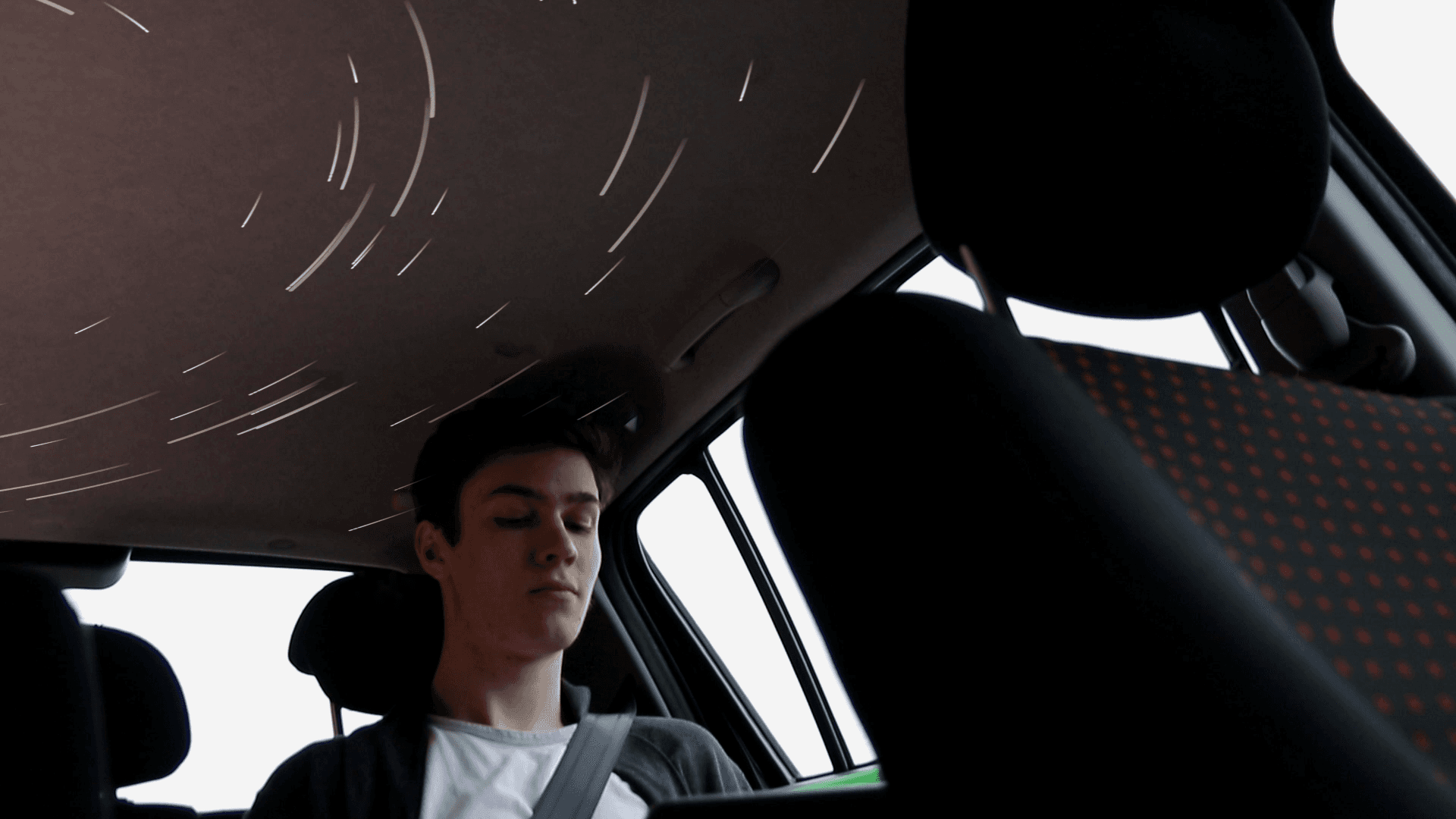
ComSky
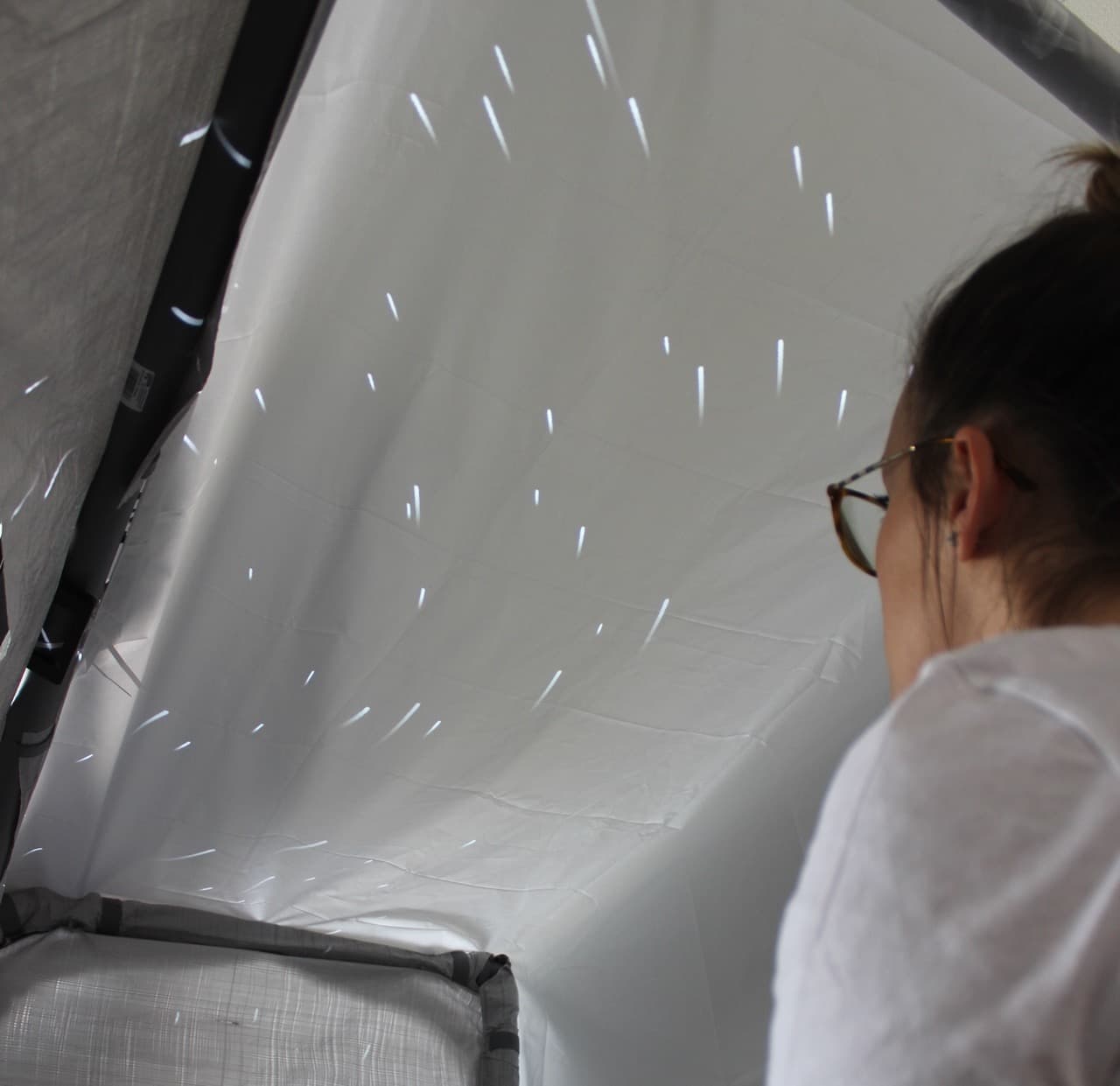
Mounted on the ceiling, ComSky projects a dynamic night sky display featuring stars that subtly shift in alignment with the vehicle's intended maneuvers. Before turning, accelerating, or braking, the celestial pattern begins to move slightly ahead, giving passengers an early visual cue of what's coming. Beyond its functional role as an anticipation mechanism, the starlit canopy adds an aesthetic dimension to the ride—transforming the cabin into a contemplative space where motion feels graceful rather than abrupt. The dual purpose of ComSky is to build trust through prediction while simultaneously creating a calming, immersive atmosphere.
Protoype
Experience Trust
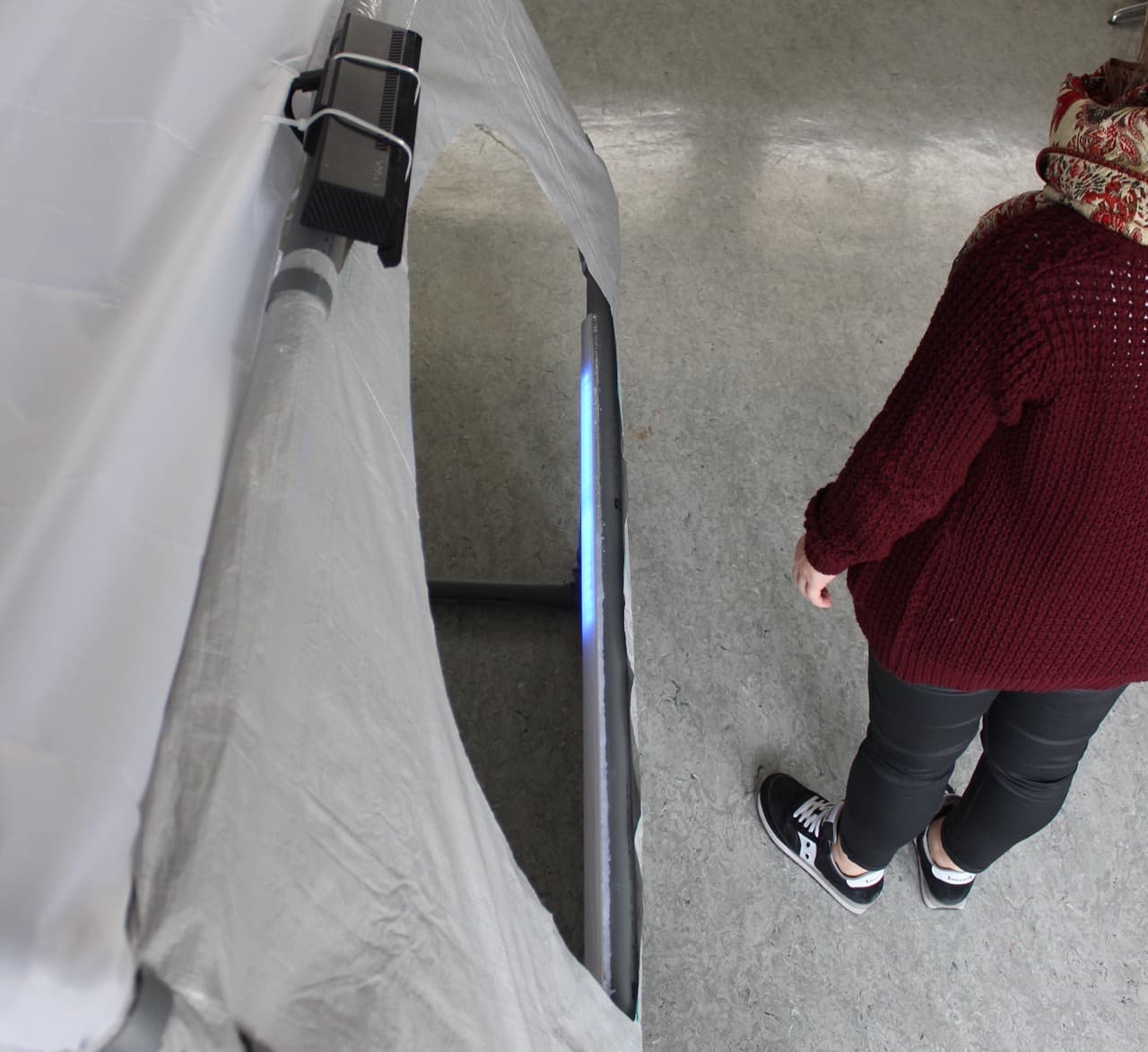
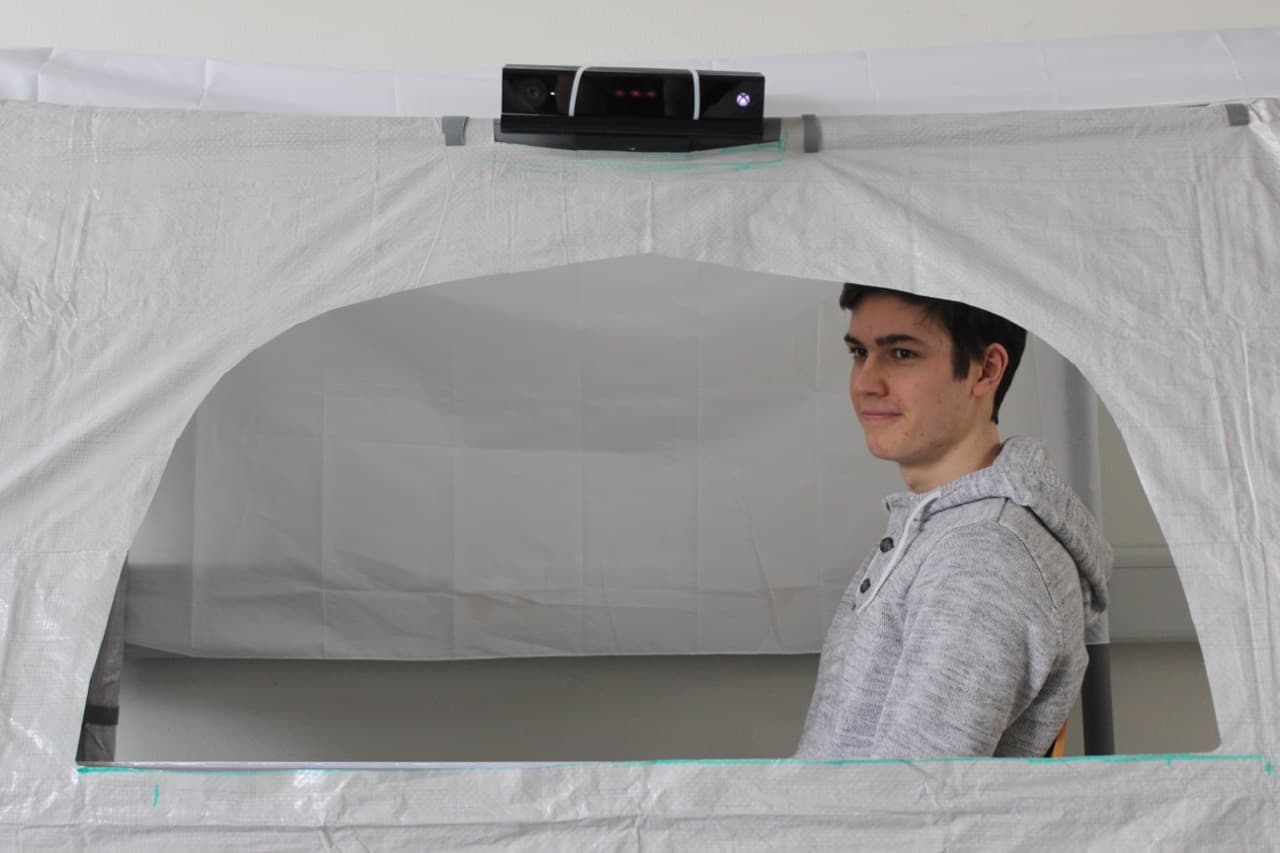
To bring comcar to life, we built a rudimentary booth from plastic fabric that mimicked the interior of a car cabin. An interactive projection on the ceiling displayed ComSky, controlled from outside the booth so that the starfield would shift and move in alignment with simulated vehicle maneuvers. Below the window, an LED strip served as ComLight, visually communicating detected objects from the outside world. A Kinect sensor captured environmental data, which an Arduino script translated into light signals to illuminate corresponding sections of the strip. This setup allowed visitors to sit inside the booth and directly experience the comcar information system—a working demonstration showing how perception transparency and motion anticipation could coexist to build passenger trust in autonomous vehicles.